
- Noticias cruzando el mar
- Noticias cruzando el mar #10
- Noticias cruzando el mar #9
- Noticias cruzando el mar #8
- Noticias cruzando el mar #7
- Noticias cruzando el mar #6
- Noticias cruzando el mar #5
- Noticias cruzando el mar #4
- Noticias cruzando el mar #3
- Noticias cruzando el mar #2
- Noticias cruzando el mar #1
Europa
Desde hace algunos años, el CELE ha comenzado a trabajar en la regulación europea de internet, ya que consideramos que la Digital Services Act (DSA) aprobada en 2022 supone un cambio de paradigma fundamental en términos de cómo se regulará internet de aquí en adelante. Por ello, desde 2023 desarrollamos un trabajo específico sobre y alrededor de la DSA, participamos de conferencias y encuentros de política pública, contribuimos a consultos realizadas por la Comisión Europea y—en general—seguimos de cerca los desarrollos en la región.

Destacado
Acceso a datos para investigadores
Participamos junto a InternetLab en el proceso de consulta con comentarios a una versión preliminar de este reglamento.

Últimas noticias y análisis
Noticias cruzando el mar
Prueba de producción de newsletter.

Acceso a datos para investigadores
Participamos junto a InternetLab en el proceso de consulta con comentarios a una versión preliminar de este reglamento.
La integridad de la información, ¿un proyecto irrealizable?
La integridad de la información es un concepto confuso, que resulta vago y ambiguo y que ---como tal--- es poco útil para pensar en la gobernanza del ecosistema digital.

Risks and Rewards: CELE y CiTiP co-organización sesión sobre riesgos sistémicos y derechos fundamentales en el Digital Services Act
Discusión en KU Leuven sobre el enfoque basado en riesgos y sus problemas
Threatening dynamics on Internet governance: the case of Europe and the Digital Services Act (DSA)
Threatening dynamics on Internet governance: the case of Europe and the Digital Services Act DSA As part of their research on the topic, CELE has characterized a threat of regulation as “any kind of public or private utt

Actividades del CELE en Europa y el estado del debate sobre la DSA
Actividades del CELE en Europa y el estado del debate sobre la DSA El CELE, representado por su investigador Nicolás Zara, participó durante la última semana de junio del European Rights & Risks: Stakeholder Engagement F

Indefiniciones y buenas intenciones
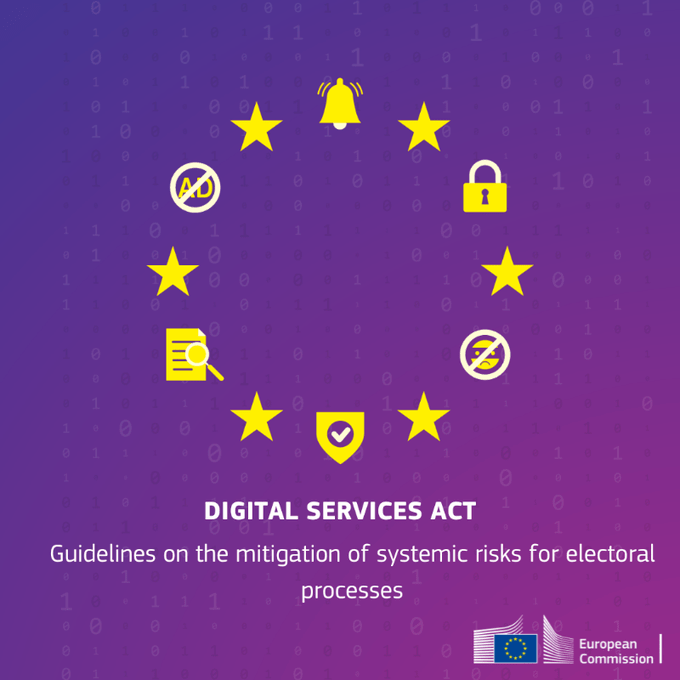
Las directrices de la Comisión Europea para la mitigación de riesgos sistémicos en contexto de procesos electorales
Participación del CELE en la quinta edición de la Civil Society Roundtable Series en Bruselas: la Sociedad Civil al frente
Participación del CELE en la quinta edición de la Civil Society Roundtable Series en Bruselas: la Sociedad Civil al frente
Seminario en Leiden
Entre la crítica y el rescate del discurso de derechos humanos para la gobernanza de Internet

Entusiasmo, expectativa e incertidumbre: la participación del CELE en la DSA and Platform Regulation Conference en los Países Bajos
Entusiasmo, expectativa e incertidumbre: la participación del CELE en la DSA and Platform Regulation Conference en los Países Bajos

Comentarios del CELE a la consulta de la CE sobre la implementación de informes de transparencia de empresas en la Ley de Servicios Digitales de la Unión Europea
Comentarios del CELE a la consulta de la CE sobre la implementación de informes de transparencia de empresas en la Ley de Servicios Digitales de la Unión Europea
Challenges to Majority World Participation in European Union's Data Access for Platform Researchers Consultation
Challenges to Majority World Participation in European Union’s Data Access for Platform Researchers Consultation Introduction Article 40 of the Digital Services Act (DSA) enables vetted public interest researchers to access data from very large online platforms with over 45 million active users in the European Union (EU). The EU recently opened a submission period for comments on the implementation of data …
Los requisitos de presencia comercial en la DSA
El pasado 4 de octubre el Consejo de la Unión Europea aprobó la Ley de Servicios Digitales (Digital Services Act o DSA por sus siglas en inglés) la cual pretende regular la responsabilidad de las empresas sobre la moderación de contenido, aumentar la transparencia, proteger la privacidad de los usuarios y regular demás servicios que se desarrollan dentro del ámbito digital. Esta ley merece ser analizada y discutida …

Desglosando la nueva regulación europea contra la difusión de contenido terrorista en línea
El pasado miércoles 28 de abril, el Plenario del Parlamento Europeo aprobó la regulación sobre la lucha contra la difusión de contenidos terroristas en líneahttps://data.consilium.europa.eu/doc/document/ST-14308-2020-REV

Nueva mesa parlamentaria en el #IGF2020.
Asimismo, esta falta de autocrítica pareciera replicarse en el punto Confianza en los Parlamentarios, al obviar destacar cómo el comportamiento de los/as propios/as parlamentarios/as y la poca transparencia que revisten los mecanismos legislativos en distintos países han afectado la confianza (o la falta de ésta) de la ciudadanía en éstos/as. Finalmente, si bien destacamos la incorporación del segmento anual de alto …
Directiva Europea de Derechos de Autor
La Directiva Europea de Derecho de Autor y su impacto en los usuarios de América Latina y el Caribe: una perspectiva desde las organizaciones de la sociedad civil El CELE junto a otras organizaciones que forman parte del
Publicaciones
Moderating Hate or Moderating Rights? The Paradox of the European Approach to Online Hate Speech and Platform Liability
CELE Research Paper No. 69SSRN ID: 5432875This paper critically assesses the European approach to regulating online hate speech through platform liability frameworks, focusing on Germany’’s Network Enforcement Act (NetzDG) and the European Union’’s Digital Services Act. It argues that these laws, while aiming to curb online harm, risk infringing on the right to freedom of expression and non-discrimination by delegating content moderation powers to private, profit-driven companies. The paper highlights how tight removal deadlines, …
Reclaiming Human Rights for Platform Governance: Proposals for Restoring Their Centrality in the Era of Risks
CELE Research Paper No. 66. Publisghed in Proceedings of Fourth European Workshop on Algorithmic Fairness, in Proceedings of Machine Learning Research 294:265-280 Available from https://proceedings.mlr.press/v294/del-campo25a.html.SSRN ID: 5265938The Digital Services Act can potentially become a tool for change toward a more rights-abiding, competitive European digital platform ecosystem. However, as it currently stands, it is prone to be misused as a powerful tool for censorship as well as a tool to displace human rights as the backbone of the rule of law in modern democracies. Its risk-based and “new governance” approach to regulation puts rights on the back burner, and, while paying lip service to them, takes them off the center stage
Are Risks the New Rights? The Perils of Risk-based Approaches to Speech Regulation
16 (2025) JIPITEC 238SSRN ID: 5161173This paper discusses the risk-based approach of the Digital Services Act (DSA) of the European Union. By embracing open-ended standards instead of rules and by imposing broad risk-identification and mitigation obligations on private parties, the DSA pushes forward a form of managerial co-regulation that is a paradigmatic shift in platform regulation, that has already influenced other regulatory proposals around the globe. This paper argues that the move is consequential from the perspective of t
From Comics to Memes: Old and New Issues Surrounding Humor and Freedom of Expression
CELE Research Paper No. 39SSRN ID: 5152068In 2018, the “Save the meme” campaign sparked global attention among the online human rights activist community. Under the slogan “No memes, no democracy,” numerous international organizations joined together to collect signatures against the reform of the European copyright directive, which they considered a serious threat to freedom of expression. The United Nations Special Rapporteur for Freedom of Expression also expressed concern about the negative consequences that this regulation would br